
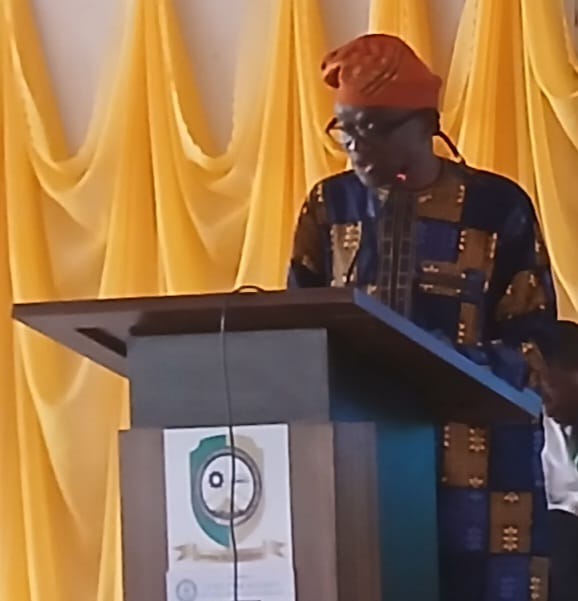
A renowned professor and Dean, Faculty of Arts University of Ilorin, Professor Olalere Adeyemi has postulated that African digital humanities must tailor its own garments, methods, epistemologies, languages, rather than wear ill-fitting imports.
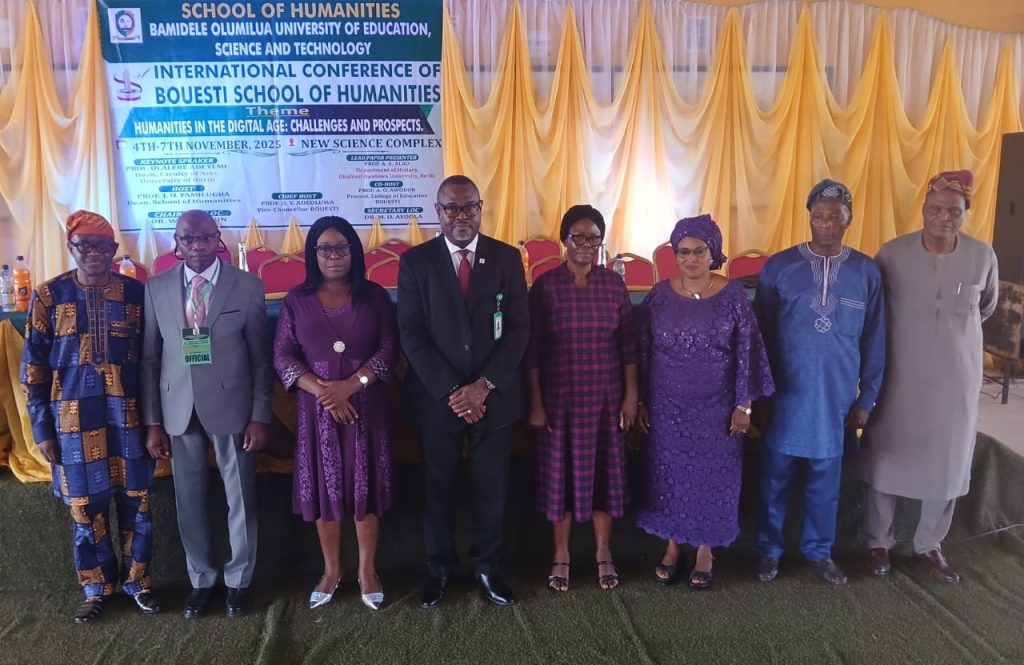
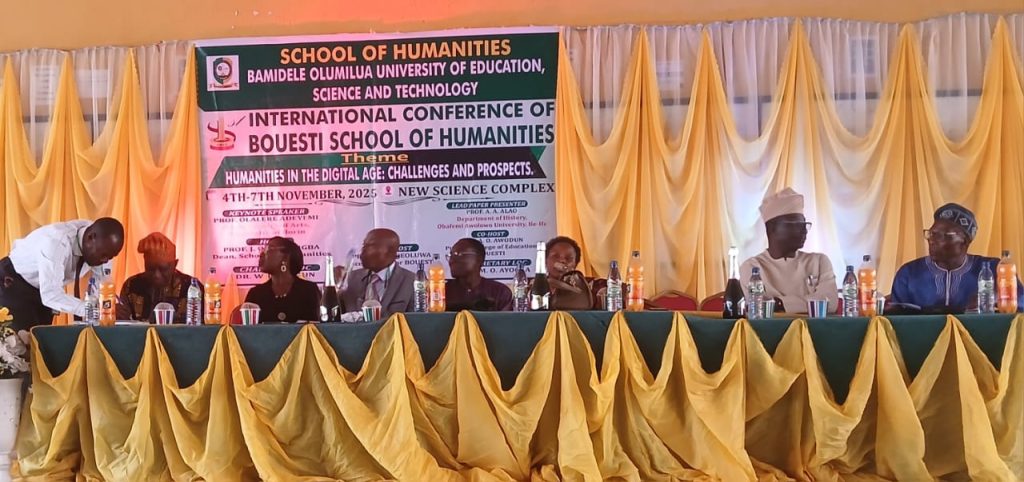
He said this as the Keynote Speaker at the first international conference of the Bamidele Olumilua University of Education, Science and Technology, Ikere-Ekiti BOUESTI, Ekiti State
Speaking on the theme, “Humanities in the digital age: Challenges and Prospects”, on Wednesday at the University main campus in Ikere-Ekiti, the erudant scholar remarked that an imitated trouser is either too tight or too loose, adding that one’s own garment is never short by an inch as he explained that the discussion centered on how the humanities are now divided into two broad categories, traditional humanities and modern digital humanities.
To bridge the gap, he advised government to fund education better as he said that it’s only South Africa that currently has functional digital centers that promote collaboration between computer scientists and humanists.
“Nigerian universities should begin establishing such centers and incorporating digital humanities into their programmes. Collaboration and teamwork are essential. The days of the lone researchers are gone. When experts from various fields work together, they can solve problems faster and better”.
Noting that there is low awareness among scholars, especially in the humanities, about using digital tools for teaching and research, Professor Adeyemi noted that during the COVID-19 pandemic, for instance, 1.6 billion students worldwide were out of school. While advanced countries continued learning online, Africa largely could not.
“This dominance limits the visibility of African knowledge systems. African scholars must begin to promote their own languages and epistemologies, telling their stories, preserving their cultures, and contributing to global knowledge on their own terms.
“In the job market, graduates in the traditional humanities often struggle compared to those in Science, Technology, Engineering, and Mathematics. However, integrating digital tools into the humanities can bridge that gap. A humanities graduate with digital competence becomes far more relevant and employable in today’s world.
He emphasized that If digital humanities had been well integrated, learning would not have stopped and that lectures and assignments could have continued remotely during the COVID-19 he earlier cited as an example.
He said students should equally be trained to use their devices for research and academic work rather than just entertainment.
“Every smartphone today is essentially a library filled with books, papers, and tools for learning. Workshops, training programmes, and curriculum reforms are necessary”
According to him, the National Universities Commission (NUC) has already begun integrating digital humanities into curricula, which will help expand knowledge and improve research methods.
“Digital humanities are not about imposing technology on the humanities but about using technological products and processes to make work easier and more effectively”.
Speaking on the significance of humanities,, the don maintained that science is incomplete without humanity noting that humanities gain immensely when they embrace science and technology.
Highlighting some of the challenges, the Professor said In Africa, less than 30% of the people have internet coverage compared to over 90% in Europe. Many lack access to phones, computers, and the internet, making it difficult to keep up with global trends.
“Another problem is poor infrastructure inadequate electricity and internet connectivity. Without power, digital tools cannot function”, said he.
On his part, the lead paper presenter, Professor Akin Alao from the Department of History, Obafemi Awolowo University, Ile Ife, while recommending policy advocacy, he described the digital age as an era of endless possibilities.
Professor Alao, said the future of humanities lies not in a defensive retreat from technological changes, but in a thoughtful and critical engagement with it.
He therefore called for integration of digital literacy into humanities education.
Declaring the conference open, the Acting Vice Chancellor of the Institution, Professor Olu Aturamu congratulated the Dean, School of Humanities, Bamidele Olumilua University of Education, Science and Technology, Professor Familugba and his team for putting up such a programme which according to him was very apt at this time saying it is meant to develop the African values.
One of the participants, Akingbade Adenike Grace, who said the programme has opened her eyes to the importance of preserving culture and language in the digital world advised Nigerians not to abandon their traditions or rush to adopt foreign cultures. “Instead, we should use digital platforms such as the internet to promote our own culture, making it accessible globally.