
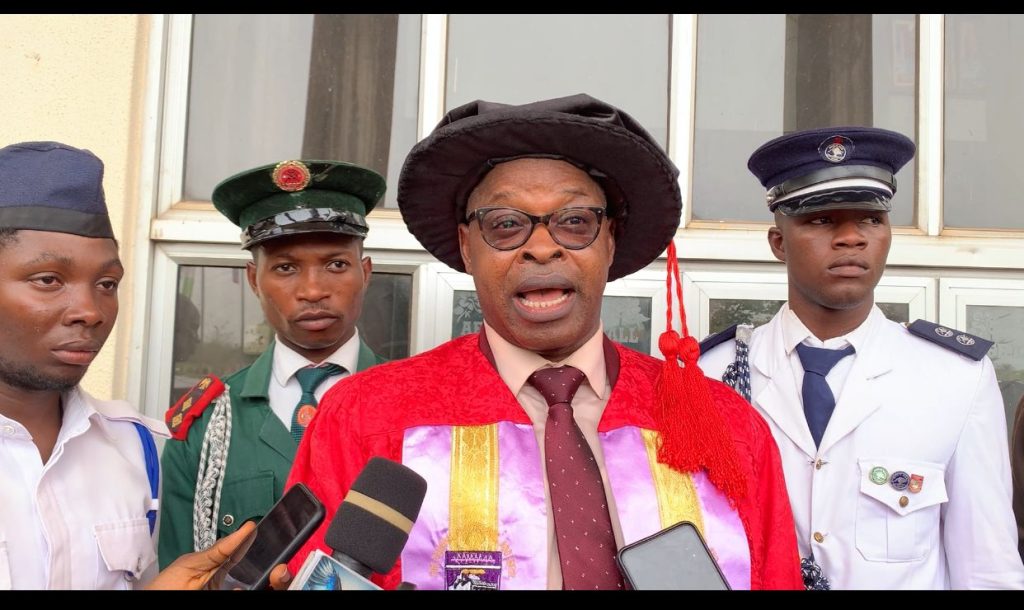
The Rector of Federal Polytechnic Ado-Ekiti, Dr. Temitope John Alake, has enjoined the newly admitted students to embrace discipline, hard work, and integrity while warning that misconduct and poor academic performance will not be tolerated as they begin their academic journey.
Speaking during the 2025/2026 matriculation ceremony held at the Atiku Abubakar Conference Hall in Ado-Ekiti, the rector formally welcomed the new intakes, describing their admission as a product of merit, resilience, and determination in a highly competitive selection process.
Alake made it clear that matriculation goes beyond ceremony, stressing that it is a binding academic commitment that requires students to strictly adhere to institutional rules and values, he said.
He emphasized the institution’s long-standing reputation since its establishment in 1977, noting that the polytechnic has consistently produced skilled graduates who contribute meaningfully to national development and the global workforce.
The rector charged students to take full responsibility for their success by attending lectures regularly, engaging in practical sessions, and making effective use of academic resources, adding that discipline and commitment remain the key drivers of academic excellence.
He also advised students to cultivate a strong reading culture and manage their time effectively, warning that poor time management often separates average students from high achievers in academic environments.

Alake further directed students to study the Students’ Information Handbook carefully, cautioning that ignorance of institutional regulations would not be accepted as an excuse and could result in penalties ranging from suspension to outright expulsion.
On conduct, the rector declared zero tolerance for anti-social behaviors, including examination malpractice, cultism, internet fraud, harassment, and indecent dressing, insisting that the institution prioritizes integrity, discipline, and mutual respect.
Beyond conduct, he warned students to be cautious in their use of social media, noting that spreading false information or engaging in harmful online activities could attract both institutional sanctions and legal consequences.
He revealed that about 7,000 students were matriculated for the session only about 30 percent of the institution’s capacity highlighting a worrying gap in enrollment despite the school’s ability to accommodate over 12,000 full-time students, a situation he linked to societal bias against technical education, even as matriculating students expressed excitement and determination to succeed.