
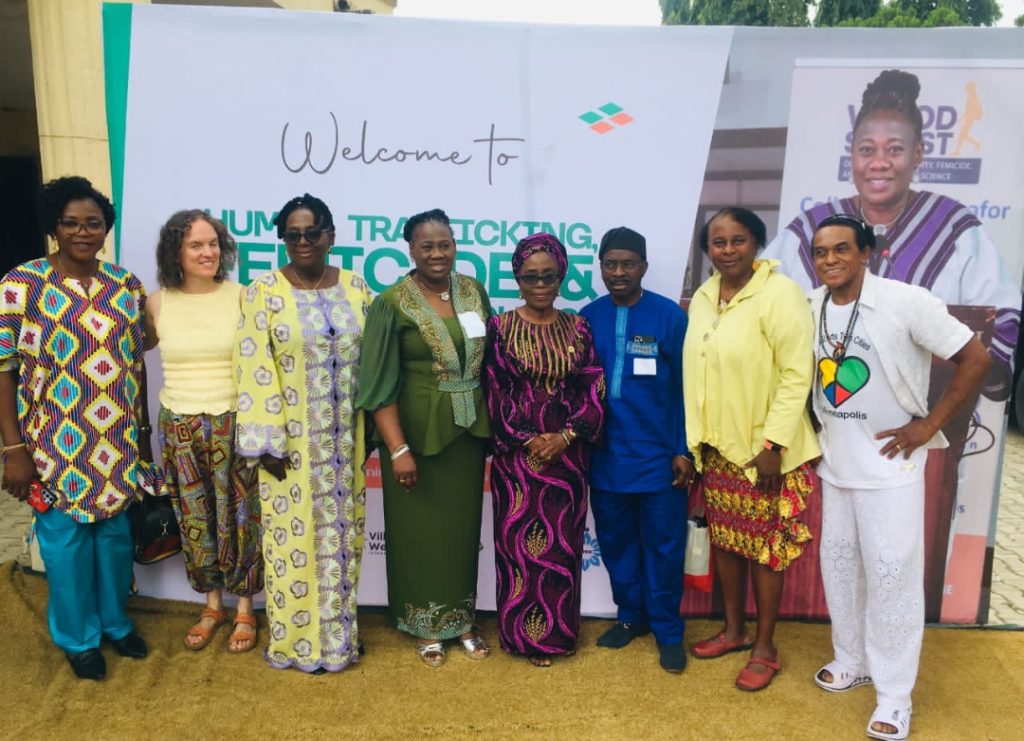
By Sunday Afolabi
Stakeholders across Ekiti State have renewed their commitment to ending human trafficking, femicide and gender-based violence, calling for stronger collaboration, public awareness and decisive action to protect women, girls and other vulnerable members of society.
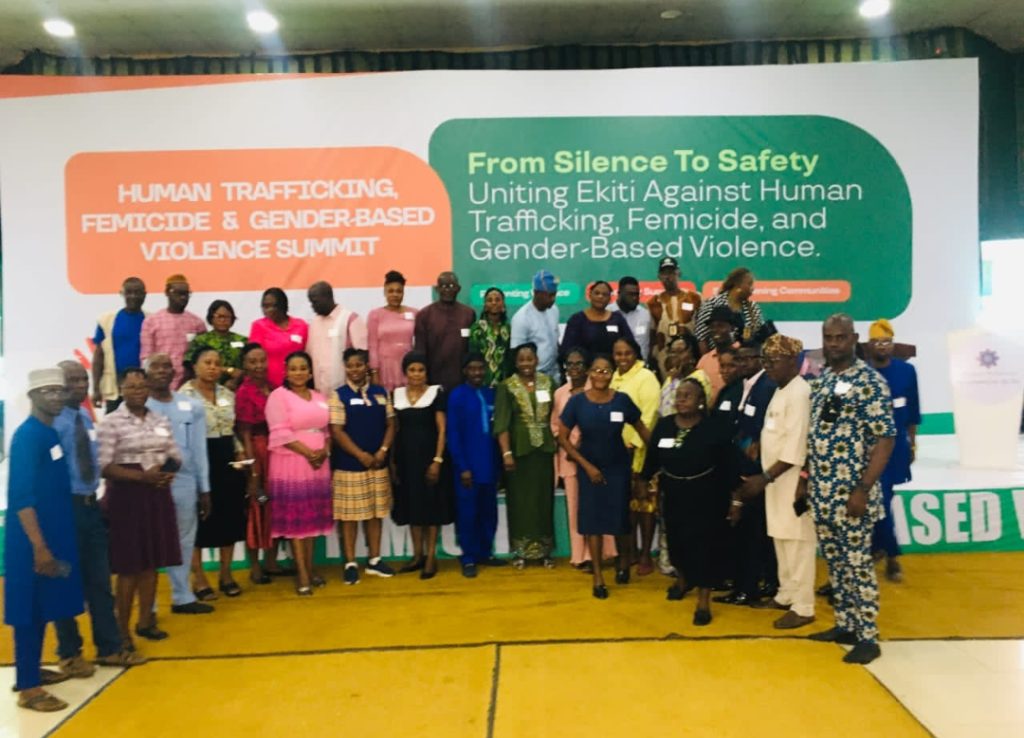
The call was made during a day submit titled “From Silence to Safety: Uniting Ekiti State Against Human Trafficking, Femicide and Gender-Based Violence” held at Adetiloye Hall, Trade Fair Complex, Old Iyin Road, Ado-Ekiti.
The summit brought together government officials, security agencies, civil society organisations, journalists, community representatives and other stakeholders to strengthen a coordinated response to the challenges.
The convener and Founder/Executive Director of Restoration for All Inc., Minnesota, United States, Dr. Tolulope Monisola Ola, said the summit was designed to transform discussions on trafficking, femicide and gender-based violence into practical interventions.
She said the initiative followed discussions and resolutions reached at a Parliament gathering in Italy on October 16 and 17, 2025, stressing that no individual or organisation could tackle the challenges alone.
Ola added that Ekiti was deliberately chosen because of her connection with the state and her desire to complement the efforts of the state government and the First Lady, Her Excellency Dr. Olayemi Oyebanji.
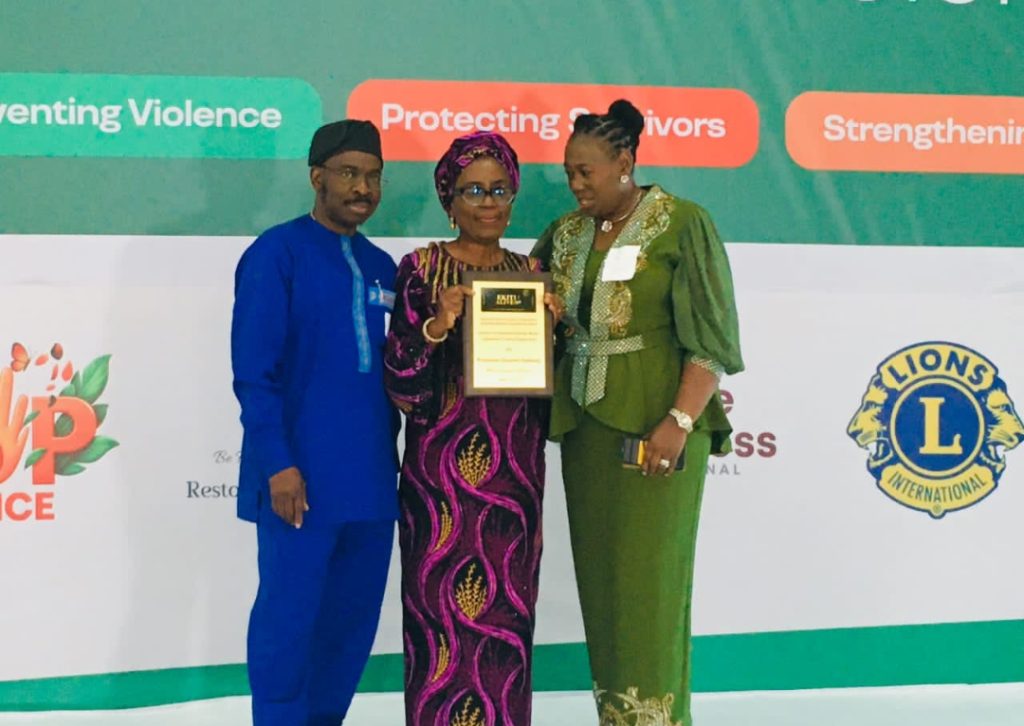
Representing the First Lady, the Commissioner for Women Affairs, Mrs. Olapeju Babafemi, reaffirmed the state government’s commitment to protecting women, girls and vulnerable persons from violence and exploitation. She said survivors needed protection, justice and sustained support rather than stigma, stressing that gender-based violence must not be treated as a private family matter.
She urged families, schools, communities and institutions to create safe environments where children and survivors could speak without fear, while calling on residents to embrace the principle of “see something, say something.”
Babafemi also warned against the dangers of human trafficking, particularly deceptive offers of employment, education and travel opportunities. She urged families to ask questions before allowing their children to accept such offers and called for stronger prevention, protection and referral systems. According to her, the responsibility for ending trafficking and gender-based violence cannot be left to government alone, as families, religious bodies, schools, security agencies, civil society organisations and individuals all have roles to play.
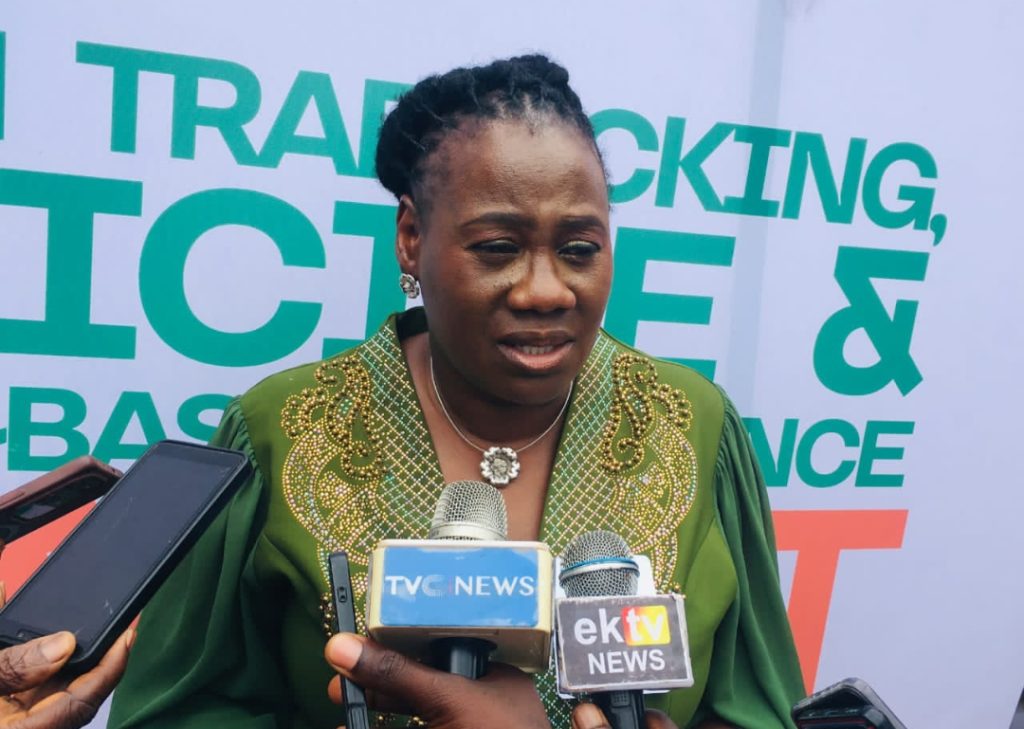
The Head of Service, Ekiti State, Dr. Folakemi Olomojobi, described the summit as timely, saying human trafficking, femicide and gender-based violence were not merely family matters but concerns involving human rights, development, justice and public safety. She said silence often protects perpetrators rather than victims and commended Ekiti for its existing legal and institutional framework against gender-based violence, including the state’s Gender-Based Violence Prohibition Law and survivor-support structures. She, however, urged stakeholders to sustain and strengthen these interventions.
The Founder and Executive Director of Bill Wellness International Inc., Minnesota, Dr. Richard Oni, identified awareness, education, data collection and collaboration as critical tools in the fight against trafficking and gender-based violence. He said communities must document their experiences and ensure that data collected translates into practical government action. Oni also linked economic hardship and unsafe migration to vulnerability to trafficking, urging authorities to create better opportunities and strengthen public awareness.
During the interactive session, representatives of the Nigeria Police Force, Nigeria Security and Civil Defence Corps, Nigeria Immigration Service, NDLEA, Nigerian Correctional Service and Ministry of Justice outlined their roles in tackling trafficking and gender-based violence. The police representative said the force investigates trafficking cases beyond arresting suspects, while the Civil Defence representative highlighted its investigation and sensitisation activities. Immigration officials warned residents about deceptive promises of greener pastures abroad, while the NDLEA stressed the connection between drug abuse, exploitation and vulnerability.
The Chairperson of Women Journalists, Comrade Adewumi. Ademiju, called on journalists to intensify public enlightenment and grassroots sensitisation, including house-to-house campaigns. She said existing laws against gender-based violence would have limited impact without awareness, effective enforcement and community participation. A participant, Mr. Sunday Ebenezer Adebomi, also commended the summit for drawing attention to Nigerians, particularly young women, who are deceived into travelling abroad and subsequently subjected to trafficking and exploitation.
The summit ended with stakeholders calling for a united and sustained response to human trafficking, femicide and gender-based violence. They urged government, families, communities, security agencies, civil society organisations and the media to move beyond conversations to measurable action, insisting that the fight must progress from silence to safety, from awareness to action and from promises to results, while protecting the dignity, freedom and future of women, girls and other vulnerable persons.